Ladakh Travel Guide: Where Altitude Refines Experience
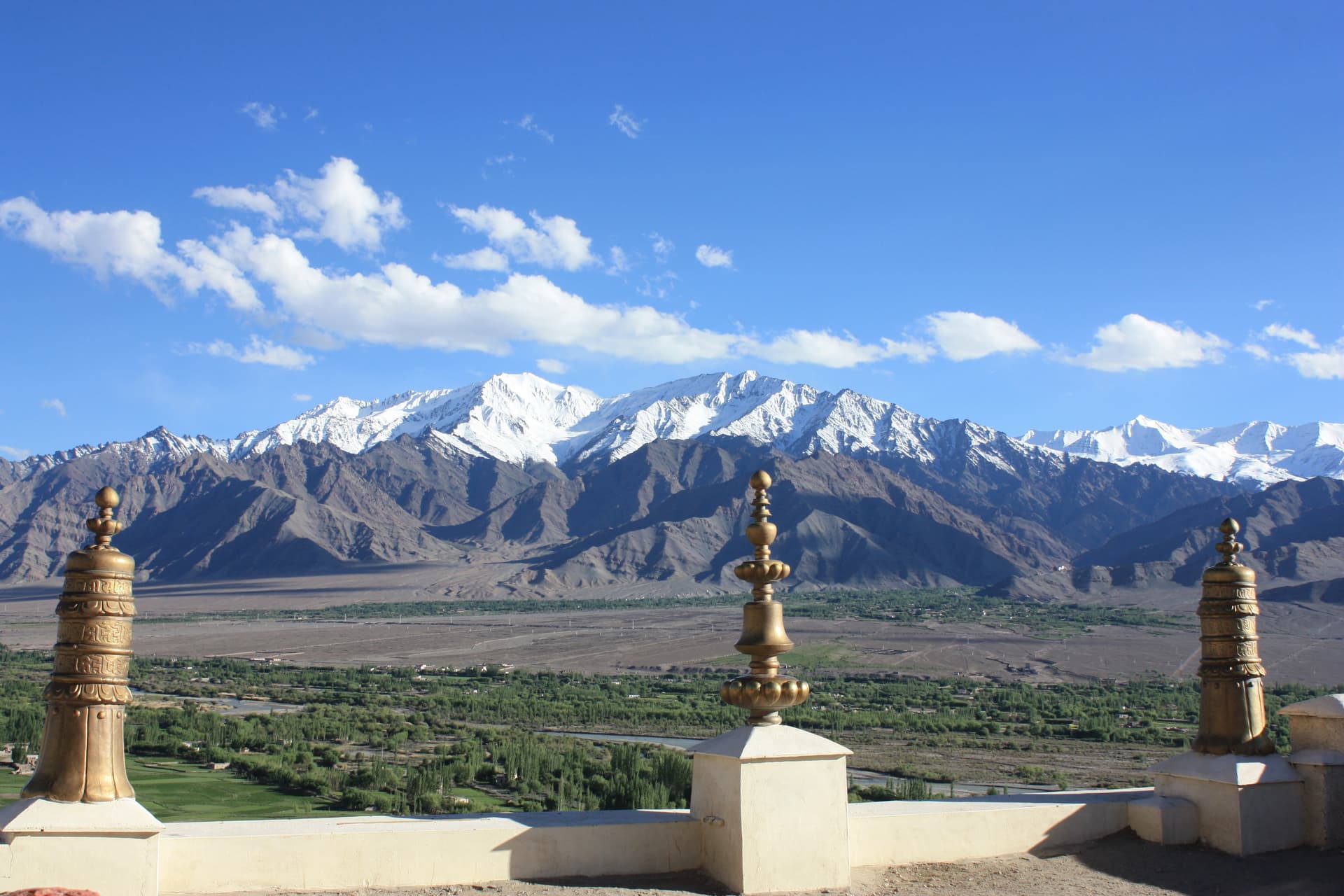
A Ladakh travel guide is not about ticking sights at 3,500 meters. It is about recalibrating perception—of scale, silence, and intention.
Suspended between the Karakoram and the Himalayas, Ladakh is less a destination than a state of mind. The altitude strips away excess. What remains is clarity: monasteries anchored to cliffs, light that feels architectural, and a culture shaped by restraint rather than spectacle.
This guide is written for travelers who value meaning over momentum, and context over conquest.
Why Ladakh Matters Now
As overtourism reshapes many alpine regions, Ladakh remains discerning rather than defensive. Infrastructure has improved, yet the rhythm of life—rooted in Tibetan Buddhism, agrarian cycles, and communal design—remains intact.
For travelers seeking high-altitude travel in India with cultural authority and spatial drama, Ladakh offers rarity: access without dilution.
Understanding Ladakh’s Geography & Cultural Context
Ladakh is a cold desert, not a pastoral Himalayan fantasy. Its beauty is mineral, spare, and intentional.
Leh functions as the cultural and logistical nucleus
Indus Valley villages reveal lived heritage and vernacular architecture
Changthang Plateau offers nomadic landscapes of almost abstract scale
Culturally, Ladakh sits at the intersection of Tibetan Buddhism and Indo-Asian trade history. Monasteries are not relics; they are active institutions shaping daily life, calendars, and ethics.
Best Time to Visit Ladakh (Seasonality Matters)
Timing defines the experience.
Summer: May to September
Best for first-time travelers
Roads from Manali and Srinagar open
Festivals animate monasteries
Clear skies, controlled access
Ideal for travelers seeking a complete Ladakh itinerary with mobility and comfort.
Shoulder Season: Late September
Best for photographers and minimalists
Fewer visitors
Sharper light
Early snowfall at higher passes
Winter: November to February
For specialists only
Extreme cold
Frozen rivers
Profound stillness
This is Ladakh reduced to its essence—rewarding, but uncompromising.
Monasteries as Design, Not Detours
In Ladakh, monasteries are not “attractions.” They are spatial philosophies.
Thiksey Monastery: Symmetry and hierarchy, best at dawn
Hemis Monastery: Ritual, scale, and living tradition
Lamayuru: Landscape and structure dissolving into one
Observe how form follows function—thick walls, muted pigments, deliberate orientation to light.
Where to Stay: Quiet Luxury & Considered Hospitality
Accommodation in Ladakh rewards discernment.
Look for:
Restored heritage homes in Indus Valley villages
Design-forward eco-lodges prioritizing thermal intelligence
Small properties aligned with local employment and materials
Avoid generic hotels in Leh unless using them strictly for acclimatization.
Food in Ladakh: Altitude-Driven Cuisine
Ladakhi cuisine is pragmatic, seasonal, and deeply local.
Expect:
Barley-based staples
Fermented vegetables
Slow-cooked lentils
Butter tea as sustenance, not novelty
The pleasure lies in context—meals taken slowly, often with families rather than menus.
Who Ladakh Is For (And Who It Isn’t)
Ideal for:
Culturally fluent travelers
Designers, photographers, thinkers
Those comfortable with silence and constraint
Not ideal for:
Fast-paced sightseeing
Luxury defined purely by excess
Travelers unwilling to adapt physically or mentally
Ladakh demands participation, not consumption.
How Ladakh Fits Into a Larger Journey
Ladakh pairs well with contrast.
Consider combining it with:
Kashmir for water and softness
Delhi for density and design
Spiti Valley for comparative Himalayan culture
The transition enhances Ladakh’s clarity rather than competing with it.
Practical Intelligence: What Experienced Travelers Know
Acclimatization is non-negotiable
Design your itinerary around rest, not ambition
Respect photography boundaries—monasteries are living spaces
Water scarcity is real; restraint is cultural currency
A Final Perspective
A Ladakh travel guide should not persuade you to go.
It should prepare you to arrive correctly.
Ladakh does not reward urgency.
It rewards attention.
For those willing to slow their pace and sharpen their perception, Ladakh offers something increasingly rare in modern travel: quiet authority, earned rather than announced.