Malabar Coast Cuisine, Kerala: A Journey Through Bold Flavours, Fresh Seafood & Coastal Traditions
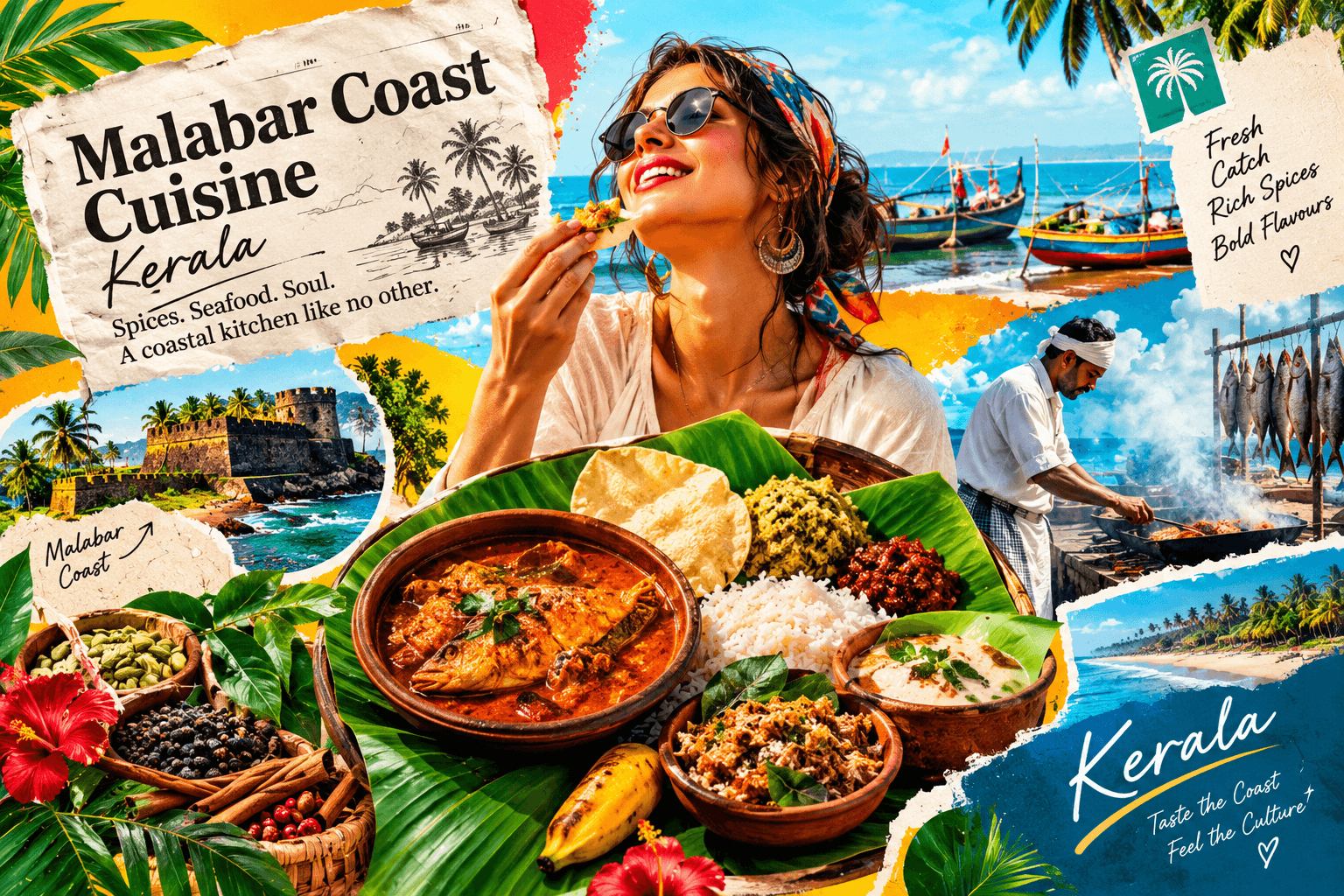
Malabar Coast Cuisine, Kerala: A Journey Through Bold Flavours, Fresh Seafood & Coastal Traditions
Fresh catch. Fragrant spices. Coconut-rich curries. And a food culture with a story in every bite.
Some destinations are remembered for their landscapes. Others stay with you because of what you ate there.
Along Kerala's Malabar Coast, the two come together beautifully.
The northern coastline, stretching across destinations such as Kozhikode, Thalassery and Kannur, has a distinctive culinary identity shaped by the Arabian Sea, local ingredients, centuries of trade and generations of home cooking.
Here, biryani is more than a familiar favourite. Seafood carries the flavour of the coast. Rice appears in countless forms, from soft pathiri to crisp snacks and comforting meals. Coconut, chilli, curry leaves and aromatic spices bring depth to dishes that are rich in character without needing unnecessary complexity.
Welcome to Malabar cuisine — where coastal ingredients meet bold flavours, cultural heritage and the everyday pleasure of a good meal.
If you're planning a trip through northern Kerala, make room for the food. It deserves a place on your itinerary just as much as the beaches, historic streets and scenic drives.
01. WHAT MAKES MALABAR CUISINE DIFFERENT?
Malabar cuisine reflects the character of Kerala's northern coast. Its food traditions have developed through local agriculture, fishing communities, regional cooking practices and historic connections with traders who travelled across the Arabian Sea.
The result is a cuisine with plenty of variety.
Rice is central. It appears as steamed rice, biryani, pathiri, appam-like preparations and a range of snacks.
Seafood is a coastal favourite. Fish, prawns, mussels and other seafood feature in many regional preparations, depending on the location and season.
Spices create depth. Pepper, cardamom, cloves, cinnamon, turmeric and chilli are among the ingredients used across the region's cooking traditions.
Coconut adds character. Fresh coconut, coconut milk and coconut oil contribute to the texture and flavour of many dishes.
Sweet dishes have their own place. Banana, coconut, eggs, flour and jaggery appear in a range of traditional snacks and desserts.
Malabar food is not one fixed menu. Recipes differ between households, communities, towns and restaurants. That is part of the appeal: travelling along the coast gives you opportunities to discover different interpretations of familiar ingredients.
THE MALABAR FOOD PHILOSOPHY
Fresh ingredients, carefully balanced spices and recipes shaped by place. The best way to understand the cuisine is to taste it one meal at a time.
02. THE DISHES YOU SHOULD NOT MISS
If you want to understand Malabar through its food, start with the regional classics. You do not need to order everything in one sitting. Follow your appetite, ask what is freshly prepared and leave room for something unexpected.
01 — Thalassery Biryani: The Region's Signature Plate
Few dishes are as closely associated with Malabar's food identity as Thalassery biryani.
Unlike biryanis made with long-grain basmati rice, the traditional Thalassery style is associated with kaima or jeerakasala rice, a fragrant short-grain variety. Aromatic spices, onions, herbs and the chosen meat or other main ingredient come together in a preparation known for its distinctive flavour.
Recipes vary between kitchens, and the balance of spice, aroma and richness can differ from one restaurant to another.
What to look for: Fragrant rice, well-cooked meat, balanced seasoning and a preparation that allows the individual flavours to come through.
Where to try it: Thalassery and Kozhikode are natural places to explore the region's biryani traditions.
Travel tip: Ask whether the restaurant serves a traditional Thalassery-style preparation rather than assuming every biryani on the menu follows the same recipe.
02 — Malabar Fish Curry: Coastal Comfort in a Bowl
Fish curry is a staple worth exploring along Kerala's coastline, and northern Kerala has its own regional interpretations.
The flavour may combine chilli, turmeric, tamarind or other souring ingredients, and sometimes coconut, depending on the recipe. The result can range from sharp and tangy to rich and gently spiced.
The fish used also varies according to local availability.
Best enjoyed with: Steamed rice or another regional rice preparation.
The experience: A simple meal of rice and fish curry can tell you plenty about a region's everyday food culture.
03 — Kallummakkaya: The Mussel Favourite
Kallummakkaya, or mussels, are associated with the Malabar coastal food tradition, particularly in parts of northern Kerala.
They may be prepared with spices, incorporated into rice dishes or cooked in other regional styles. Availability and preparation vary, so ask about the local speciality when ordering.
Why try it? It offers a taste of the coast beyond the more familiar fish curry and prawn dishes.
A useful note: Seafood freshness and seasonal availability matter. Choose a reputable establishment and ask how the dish is prepared.
04 — Pathiri: A Northern Kerala Staple
Pathiri is a traditional flatbread commonly made with rice flour. Soft and delicate, it is often served alongside curries and other savoury dishes.
Its simplicity makes it an excellent companion for flavourful gravies, particularly in Malabar-style meals.
Try it with: Chicken curry, meat preparations or other suitable regional curries.
For a more complete experience, ask whether the kitchen offers different pathiri varieties or preparations.
05 — Malabar Chicken Curry: Rich, Aromatic and Full of Character
Malabar chicken curry can bring together onions, spices, curry leaves and coconut-based ingredients, depending on the recipe.
Some versions are thick and rich; others have a lighter gravy with a more pronounced spice profile. There is no single recipe that represents every household or restaurant.
Pair it with: Pathiri, rice or another regional bread served by the restaurant.
The move: Ask about the kitchen's house speciality. Regional curries are often best explored through the way a particular cook prepares them.
06 — Unnakkaya: A Sweet Taste of Malabar
Unnakkaya is a traditional Malabar snack made using ripe plantain, typically shaped around a sweet filling that may include coconut, sugar, nuts or other ingredients.
The outside develops a golden finish when fried, while the filling adds a soft, sweet centre.
It is a satisfying choice for anyone who enjoys traditional banana-based desserts and snacks.
Best moment: An afternoon tea break, a local bakery visit or the sweet finish to a regional meal.
07 — Chatti Pathiri: Layers of Malabar Flavour
Chatti pathiri is a layered dish associated with Malabar cooking traditions. Sweet and savoury versions exist, with recipes varying by household and occasion.
The savoury preparation may use layers with a filling such as meat, egg and spices, while sweet versions may incorporate ingredients such as coconut, nuts or other fillings.
Why it stands out: It brings together preparation, texture and flavour in a dish that feels different from everyday flatbreads or curries.
Look for it at restaurants, bakeries or establishments specialising in traditional Malabar food.
08 — Pazham Pori: The Perfect Tea-Time Companion
Pazham pori, or banana fritters, is a popular Kerala snack made by coating slices of ripe banana in batter and frying them until golden.
It is simple, comforting and easy to enjoy between sightseeing stops.
Order it with: A cup of tea or coffee.
For travellers exploring northern Kerala, a local tea shop can be just as rewarding as a restaurant reservation.
09 — Kozhikode Halwa: A Sweet City Tradition
Kozhikode is well known for its halwa tradition. These sweets are available in different colours, flavours and textures, with preparations varying between makers.
A visit to a traditional sweet shop is an easy way to discover this part of the city's food culture.
What to do: Browse the selection, ask about the ingredients and choose a small assortment to sample or take home.
Good to know: Halwa varieties can differ considerably in sweetness, texture and ingredients. Ask the shopkeeper for recommendations if you're trying them for the first time.
10 — Malabar Snacks: The Little Things Worth Stopping For
Not every food discovery needs to be a full meal.
Depending on the place and time of day, look for regional snacks such as samosas, cutlets, banana fritters and other bakery or tea-shop favourites.
These everyday stops offer a glimpse into how local residents eat between meals and how food fits into the rhythm of the day.
The best approach: Follow the smell of fresh cooking, ask locals what is popular and try one or two things at a time.
03. WHERE TO EAT YOUR WAY THROUGH THE MALABAR COAST
Malabar's food culture becomes even more interesting when you explore it from town to town. Each stop offers a different setting, from busy food streets to traditional eateries and coastal restaurants.
Kozhikode — A City for Serious Food Lovers
Kozhikode, historically known as Calicut, is one of the strongest starting points for a Malabar food trail.
Its culinary reputation includes biryani, halwa, seafood and a wide range of local snacks. The city also offers opportunities to explore the relationship between coastal trade, local ingredients and food traditions.
Make time for:
A traditional Malabar biryani meal
A visit to a well-established halwa shop
Tea and local snacks
Seafood at a reputable restaurant
A walk through the city's busy markets and food areas
The mood: Lively, flavourful and rooted in everyday city life.
Thalassery — Home of a Distinctive Biryani Tradition
Thalassery has a special place in Kerala's culinary landscape because of its biryani heritage.
A visit gives you the opportunity to explore the regional preparation associated with kaima or jeerakasala rice, aromatic spices and a distinctive cooking style.
Make time for:
Traditional Thalassery-style biryani
Local bakeries and snack shops
Regional meals served with pathiri
A relaxed exploration of the town's heritage
The mood: A smaller coastal town where food and local identity are closely connected.
Kannur — Coastal Flavours and Local Food Traditions
Kannur offers a useful introduction to northern Kerala's wider food culture, with regional meals, seafood and traditional snacks available across the town and surrounding areas.
Depending on the establishment, you may find fish curry, mussel preparations, pathiri, biryani and other Malabar favourites.
Make time for:
A seafood meal featuring locally available ingredients
Regional rice and curry combinations
Traditional snacks with tea
Local eateries that focus on Kerala-style cooking
The mood: Coastal, culturally rich and well suited to a slower food-led exploration.
The Coast Beyond the Main Towns
The Malabar food trail does not end in city centres.
Smaller towns and coastal communities offer opportunities to discover local seafood, home-style curries and regional preparations that may not appear on every restaurant menu.
If you're travelling through the region, ask your accommodation host or local guide for recommendations based on your route.
One important rule: Prioritise freshness, responsible seafood sourcing and good food-handling practices rather than choosing a restaurant only because it looks photogenic.
04. A MALABAR FOOD TRAIL: THREE DAYS OF LOCAL FLAVOUR
Want to make food a central part of your Kerala holiday? A short route through Kozhikode, Thalassery and Kannur is a practical way to begin.
DAY 01 — KOZHIKODE
City Flavours, Seafood & Sweet Traditions
Start with a regional breakfast, then explore the city at a comfortable pace.
Plan a traditional lunch featuring Malabar cuisine, leaving time to sample local snacks later in the day. A visit to a halwa shop adds a sweet stop before dinner.
Food experiences to consider:
A local breakfast
Malabar biryani or a traditional rice meal
Kozhikode halwa
Tea and freshly prepared snacks
Overnight: Kozhikode.
DAY 02 — KOZHIKODE TO THALASSERY
Biryani Heritage & Traditional Snacks
Travel to Thalassery and settle in before exploring its food traditions.
Make a traditional Thalassery-style biryani the main culinary highlight of the day. Depending on availability, add a stop for regional snacks or a meal featuring pathiri and curry.
Leave time to explore the town beyond the dining table.
Food experiences to consider:
Thalassery-style biryani
Pathiri with a regional curry
Traditional bakery snacks
Tea at a local establishment
Overnight: Thalassery or Kannur, depending on your final route.
DAY 03 — THALASSERY TO KANNUR
Coastal Cooking & A Relaxed Finish
Continue towards Kannur, where the focus can shift to seafood, regional meals and a more relaxed coastal atmosphere.
Choose a reputable restaurant serving freshly prepared local dishes. If mussels or other seafood are available and suit your preferences, ask about the kitchen's regional preparations.
Finish with a local snack and tea before continuing your journey.
Food experiences to consider:
Fish curry with rice
A locally available seafood speciality
Traditional snacks
A final Malabar-style meal
Departure or onward travel: Kannur, according to your transport schedule.
ITINERARY NOTE
This is a suggested food route, not a restaurant booking or guaranteed menu. Travel times, opening hours, dish availability and seasonal seafood can vary. Confirm meal options and transport arrangements before travelling.
05. WHEN IS THE BEST TIME FOR A MALABAR FOOD JOURNEY?
Malabar cuisine can be explored throughout the year. The best travel period depends on how you want to combine food with beaches, sightseeing and outdoor experiences.
October to February — Comfortable for Exploring
This period is often popular for sightseeing and coastal travel. It can be a good choice for combining food stops with heritage walks, local markets and nearby attractions.
March to May — Plan Around the Heat
Warmer conditions may make early sightseeing, relaxed lunches and indoor breaks more comfortable. Keep your schedule flexible, especially if you plan to explore several towns.
June to September — Monsoon Atmosphere
The monsoon brings rain and lush scenery to Kerala. Food experiences can still be part of the journey, but road conditions, outdoor plans and coastal activities may require additional flexibility.
A practical tip: Restaurants, bakeries and seasonal food specials do not all follow the same schedule. Check locally if a particular dish or establishment is an essential part of your trip.
06. HOW TO EXPERIENCE MALABAR CUISINE LIKE A TRAVELLER, NOT JUST A TOURIST
A memorable food journey is not about eating at the greatest number of places. It is about understanding what makes each meal distinctive.
Start With Regional Specialities
Choose a few signature dishes, such as Thalassery biryani, pathiri, fish curry or Kozhikode halwa. Explore their variations rather than ordering the same familiar dishes at every stop.
Ask How a Dish Is Prepared
A simple question about ingredients, spice levels or cooking methods can help you find a dish that suits your preferences.
Explore Beyond Hotel Restaurants
Established local eateries, bakeries and tea shops can offer a useful introduction to everyday food culture. Choose places with appropriate hygiene and food-handling standards.
Keep Your Seafood Choices Flexible
The catch, menu and prices may vary. Ask what is fresh and available rather than insisting on a particular species at every stop.
Leave Room for Snacks
Malabar's food traditions extend beyond lunch and dinner. A tea break with pazham pori or a visit to a traditional sweet shop can become one of the day's highlights.
Be Respectful of Local Food Traditions
Recipes can carry family, cultural and community significance. Approach unfamiliar dishes with curiosity, ask before photographing people or kitchens, and respect the setting in which food is prepared and served.
Balance Food With the Journey
Combine food stops with heritage walks, coastal scenery and local markets. A well-paced itinerary gives you time to enjoy both the destination and the meal.
07. WHAT TO KNOW BEFORE YOU GO
A little preparation helps you enjoy Malabar's food culture with confidence.
Spice levels vary: Ask about heat and seasoning if you prefer milder food.
Dietary requirements matter: Confirm ingredients, cooking methods and cross-contact concerns directly with the restaurant.
Seafood availability changes: Seasonal catch and local supply can affect menus.
Meal timings differ: Some traditional dishes may be available only at particular times or on selected days.
Carry some flexibility: A recommended dish may not be available everywhere, and that's part of discovering regional food.
Check prices before ordering: Especially for seafood sold by weight or by market price.
Drink safe water: Choose sealed drinking water or a trusted source.
Keep local etiquette in mind: Follow the establishment's customs and ask permission before photographing people.
THE FINAL BITE
Malabar Is Best Remembered One Meal at a Time.
The Malabar Coast offers more than a collection of famous dishes.
It is the aroma of spices rising from a kitchen. A plate of biryani shared over lunch. Fresh fish curry served with rice. A sweet from a traditional shop in Kozhikode. A cup of tea and a warm banana fritter after a day of exploring.
These are everyday moments, but they are also part of what makes travelling through northern Kerala so rewarding.
From Kozhikode's food culture to Thalassery's biryani traditions and Kannur's coastal flavours, every stop brings another opportunity to discover the region through its cooking.
So, when you plan your next Kerala holiday, do more than add restaurants to a list.
Explore the towns. Talk to local hosts. Try the regional specialities. Take your time.
Come for the coast. Stay for the flavours. Take home a little more of Malabar.
Planning a northern Kerala escape? Explore Globaltrails Holidays' Kannur, Thalassery and Kozhikode journeys, and build a coastal itinerary around local food, culture and the places worth discovering.