Rajasthan Beyond the Postcard: 8 Extraordinary Offbeat Places to Explore in 2026
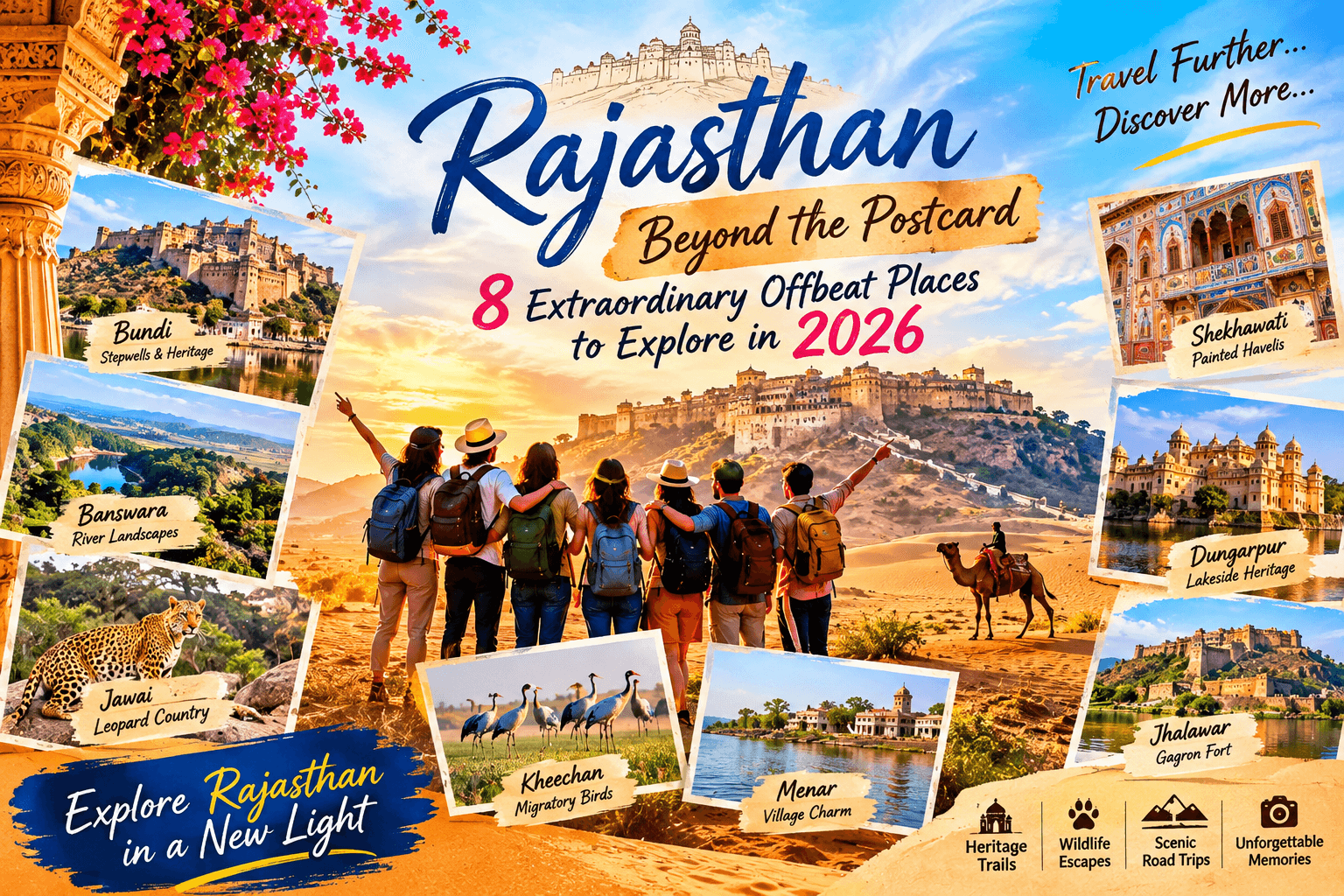
Rajasthan Beyond the Postcard: 8 Extraordinary Offbeat Places to Explore in 2026
Somewhere beyond the familiar forts, royal palaces and desert safaris, another Rajasthan is waiting to be discovered.
There is a Rajasthan most travellers know: Jaipur's pink streets, Udaipur's lakeside palaces, Jodhpur's blue lanes and Jaisalmer's golden dunes.
And then there is the Rajasthan that reveals itself when you take a different road.
It is found in Bundi's painted corridors, where old stepwells hold the memory of another age. In the quiet villages of Banswara, where the landscape turns unexpectedly green. In Jawai, where leopards move through granite hills and pastoral communities continue their traditional way of life. In Shekhawati, where entire streets become galleries of painted architecture.
For 2026, consider travelling beyond Rajasthan's familiar circuit. These destinations offer something different: slower journeys, distinctive landscapes, local traditions and experiences that are difficult to replicate elsewhere.
Here are eight places worth putting on your Rajasthan travel map.
1. Bundi – The Rajasthan of Stepwells, Murals and Old Lanes
The experience: Walk through a historic town where architecture feels personal, not monumental.
Bundi is one of Rajasthan's most rewarding heritage destinations. Set in the Hadoti region, this compact town has a character quite different from the state's better-known royal cities.
Its blue-painted houses, narrow lanes, old havelis and historic water structures create an atmosphere that invites exploration on foot. Above the town stands Taragarh Fort, while the Garh Palace is known for its historic interiors and intricate paintings.
One of Bundi's defining landmarks is Raniji ki Baori, an elaborate stepwell that demonstrates how water conservation was once integrated into architecture and everyday life.
What to experience
Explore Taragarh Fort and the historic Garh Palace.
Admire the murals and painted interiors of Chitrashala, subject to access.
Visit Raniji ki Baori and discover the engineering of traditional stepwells.
Walk through the old town and photograph its blue-painted neighbourhoods.
Spend time around Nawal Sagar Lake and the surrounding heritage streets.
Ideal stay: 1–2 nights.
Best suited for: Heritage enthusiasts, photographers, couples and slow-travel explorers.
Why visit in 2026? Bundi offers a rich heritage experience without requiring the scale or pace of a major city itinerary.
2. Banswara – The Green, River-Laced Side of Rajasthan
The experience: Discover a side of Rajasthan that feels unexpectedly lush.
In southern Rajasthan, Banswara challenges the familiar image of a dry desert landscape. The region is known for the Mahi River, its surrounding greenery, small islands, forested stretches and a strong cultural identity.
Often associated with the name City of a Hundred Islands, Banswara offers a different visual language from the dunes and sandstone architecture of western Rajasthan.
The destination is especially interesting for travellers who want to explore the state's southern landscape and combine nature with heritage.
What to experience
Explore the landscape around Mahi Dam and its river islands.
Visit Arthuna, known for its clusters of historic Hindu and Jain temple remains.
Discover Jua Falls during the monsoon season.
Explore the rural surroundings and local cultural traditions.
Visit Tripura Sundari Temple and other significant regional religious sites.
Ideal stay: 2 nights.
Best suited for: Nature lovers, cultural explorers, road-trip travellers and photographers.
Why visit in 2026? Banswara is an excellent reminder that Rajasthan is not defined by a single landscape. Its southern region offers a refreshing change from the conventional desert itinerary.
3. Jawai – Where Leopards and Pastoral Life Share the Landscape
The experience: Experience wildlife in a landscape shaped by granite hills, villages and traditional livelihoods.
Jawai, in the Pali region, has become one of Rajasthan's most distinctive wildlife experiences. Its rugged granite formations, open countryside and Jawai Dam create a striking natural setting.
The area is particularly known for its leopard population and the relationship between wildlife and local pastoral communities, including Rabari herders.
Unlike a conventional national park experience, Jawai is recognised for its distinctive landscape-based wildlife encounters. Safaris are generally organised through local operators and camps, with sightings dependent on animal movement and conditions.
What to experience
Take a guided leopard-tracking safari with a responsible local operator.
Explore the granite hill formations and surrounding countryside.
Discover the relationship between local communities and the region's wildlife.
Visit Jawai Dam and observe the birdlife when conditions are suitable.
Enjoy early-morning and late-afternoon landscape photography.
Ideal stay: 2 nights.
Best suited for: Wildlife enthusiasts, photographers, couples and nature-focused travellers.
Why visit in 2026? Jawai offers a different kind of Rajasthan wildlife journey, where the landscape and local way of life are as important as the possibility of spotting a leopard.
Travel note: Wildlife sightings are never guaranteed. Choose operators that follow responsible viewing practices and respect local communities.
4. Dungarpur – Palaces, Lakes and the Heritage of Vagad
The experience: Explore a quieter royal town surrounded by the character of southern Rajasthan.
Dungarpur is one of the most distinctive heritage destinations in the Vagad region. Its architectural character, lakeside setting and cultural history make it a rewarding stop for travellers looking beyond the usual Rajasthan circuit.
The town's most striking landmark is Juna Mahal, a historic palace known for its intricate paintings, murals and layered architecture.
Gaib Sagar Lake adds another dimension to the destination, with Badal Mahal standing along its edge. The surrounding region also offers opportunities to explore historic temples and rural landscapes.
What to experience
Explore Juna Mahal and its historic interiors.
Visit Badal Mahal overlooking Gaib Sagar Lake.
Discover the temples and heritage structures around the town.
Explore the cultural landscape of the Vagad region.
Spend time around the lakeside during the softer morning and evening hours.
Ideal stay: 1–2 nights.
Best suited for: Architecture enthusiasts, heritage travellers, photographers and road-trip explorers.
Why visit in 2026? Dungarpur brings together palace architecture, lakeside scenery and regional culture without the usual rush of Rajasthan's major tourist centres.
5. Shekhawati – An Open-Air Gallery of Painted Havelis
The experience: Travel through towns where walls tell stories.
Shekhawati is not a single destination. It is a historic region spread across parts of northern Rajasthan, particularly associated with towns such as Nawalgarh, Mandawa, Fatehpur and Mahansar.
Its identity lies in its painted havelis. Built by wealthy merchant families, these traditional mansions feature elaborate frescoes depicting mythology, everyday life, historical figures and changing artistic influences.
The result is an unusual heritage journey: instead of visiting one grand palace, you explore entire streets and neighbourhoods filled with architectural detail.
Mahansar adds another reason to visit, with the Sone-Chandi ki Haveli known for its distinctive artwork featuring gold and silver detailing.
What to experience
Explore the painted havelis of Nawalgarh.
Walk through Mandawa's historic streets and discover its heritage architecture.
Visit Fatehpur for its frescoes and merchant-era mansions.
Explore Mahansar and its celebrated Sone-Chandi ki Haveli.
Photograph traditional doorways, courtyards, frescoes and architectural details.
Ideal stay: 2 nights.
Best suited for: Art and architecture lovers, photographers, history enthusiasts and cultural travellers.
Why visit in 2026? Shekhawati is an exceptional destination for travellers who want to experience Rajasthan through its art, merchant history and everyday architectural heritage.
6. Gagron and Jhalawar – The Green Heritage of Hadoti
The experience: Discover a water-surrounded fort and a different side of Rajasthan's natural landscape.
In southeastern Rajasthan, Jhalawar offers a combination of heritage, historic sites and greener surroundings.
Its most remarkable landmark is Gagron Fort, a distinctive fortification surrounded by water on three sides by the Ahu and Kali Sindh rivers. Its setting makes it visually different from the hilltop forts that dominate much of Rajasthan's popular tourism imagery.
The wider Jhalawar region also has historic temples, caves and architectural sites that reward travellers willing to explore beyond the main attraction.
What to experience
Explore Gagron Fort and its unusual riverside setting.
Discover the historic architecture of Jhalawar.
Visit the Buddhist and Jain heritage sites around the region.
Explore the ancient caves and temple remains where access permits.
Enjoy the countryside, particularly during and after the monsoon.
Ideal stay: 1–2 nights.
Best suited for: History enthusiasts, photographers, architecture lovers and road-trip travellers.
Why visit in 2026? Gagron provides a striking alternative to Rajasthan's more familiar forts, while Jhalawar offers an opportunity to explore the state's lesser-known southeastern heritage.
7. Kheechan – A Remarkable Winter Gathering of Migratory Birds
The experience: Witness a village become a seasonal gathering place for thousands of birds.
Near Phalodi, Kheechan is known for its seasonal gathering of demoiselle cranes. These migratory birds arrive during the cooler months, creating a remarkable wildlife experience in an otherwise understated village setting.
The village's long-standing tradition of feeding and caring for the cranes has made it particularly interesting for birdwatchers and travellers interested in community-led conservation practices.
This is not a conventional wildlife safari. It is a chance to observe a seasonal natural phenomenon in a village environment.
What to experience
Observe demoiselle cranes at their feeding grounds.
Visit during the winter migration season.
Learn about the village's bird-feeding tradition.
Photograph the birds from designated viewing areas without disturbing them.
Combine the visit with a wider Phalodi and western Rajasthan road trip.
Ideal stay: A day visit or 1 night in the surrounding region.
Best suited for: Birdwatchers, photographers, nature lovers and families.
Why visit in 2026? Kheechan offers a wildlife experience that is rooted in a local tradition rather than a conventional safari format.
Travel note: The main viewing season generally falls between September and March. Bird numbers and viewing conditions vary from year to year.
8. Menar – Village Life, Wetlands and a Different Udaipur Experience
The experience: Slow down in a village where rural life and birdwatching come together.
Located in the Udaipur region, Menar is an excellent choice for travellers looking to experience rural Rajasthan beyond the city's lakes and palaces.
The village is associated with traditional community life and seasonal birdwatching around its village ponds and wetlands. It has also received recognition as a Best Tourism Village, reflecting the growing importance of rural tourism in Rajasthan.
Menar works particularly well as a countryside extension to a Udaipur itinerary. Instead of adding another palace or shopping stop, travellers can spend time observing village life and the surrounding natural environment.
What to experience
Explore the village and its traditional surroundings.
Observe seasonal birds around the local water bodies.
Experience the quieter pace of rural Rajasthan.
Discover local food and village traditions through appropriate local hosts.
Combine Menar with Udaipur and nearby countryside destinations.
Ideal stay: A day visit or 1 night, depending on available accommodation and experiences.
Best suited for: Slow travellers, birdwatchers, families and cultural explorers.
Why visit in 2026? Menar represents a more thoughtful approach to Rajasthan travel, where the destination is experienced through its community, landscape and everyday rhythms.
Rajasthan in 2026: Which Offbeat Destination Should You Choose?
Not every offbeat destination offers the same kind of holiday. Some are best for heritage exploration, others for wildlife, rural experiences or seasonal landscapes.
DestinationSignature experienceSuggested timeBundiStepwells, forts and murals1–2 nightsBanswaraRiver landscapes, waterfalls and temples2 nightsJawaiLeopard safaris and granite hills2 nightsDungarpurPalaces, lakes and regional heritage1–2 nightsShekhawatiPainted havelis and frescoes2 nightsJhalawarGagron Fort and historic sites1–2 nightsKheechanWinter birdwatchingDay visit / 1 nightMenarVillage life and wetland birdwatchingDay visit / 1 night
Three Offbeat Rajasthan Road Trips to Consider
The best way to experience these destinations is to connect places that share a geographical or cultural identity. Rather than covering too much ground, build a journey around one region.
1. The Hadoti Heritage Trail
Route: Bundi – Kota – Jhalawar – Gagron
A heritage-focused journey through stepwells, forts, historic towns and the distinctive landscape of southeastern Rajasthan.
Suggested duration: 5 days / 4 nights.
2. Southern Rajasthan: The Vagad Discovery
Route: Udaipur – Dungarpur – Banswara – Udaipur
A journey through lakeside heritage, temple architecture, river landscapes and the greener side of Rajasthan.
Suggested duration: 5–6 days / 4–5 nights.
3. The Desert and Wildlife Trail
Route: Jodhpur – Kheechan – Phalodi – Jawai – Jodhpur
A contrasting journey combining desert-region villages, seasonal birdwatching and the wildlife landscape of Jawai.
Suggested duration: 5–6 days / 4–5 nights.
These are suggested route concepts, not fixed departure schedules. Driving times, road conditions, accommodation and seasonal experiences should be checked before finalising the itinerary.
When Is the Best Time to Explore Offbeat Rajasthan?
Rajasthan's offbeat destinations are best planned around their individual landscapes and experiences.
October to March – The most comfortable travel season
This is generally the most suitable period for exploring heritage towns, rural destinations, desert landscapes and wildlife experiences. It is also the main seasonal window for birdwatching at places such as Kheechan and Menar.
July to September – The monsoon landscape
Southern and southeastern Rajasthan become particularly interesting during the monsoon. Banswara's waterfalls and the greener surroundings of Jhalawar offer a different visual experience. However, rainfall can affect road conditions and access to some locations.
April to June – Plan selectively
Summer temperatures can be high across much of Rajasthan. Early-morning sightseeing, suitable accommodation and a carefully planned schedule become especially important. For most travellers, this is a better time to choose a relaxed itinerary rather than an extensive outdoor circuit.
A Few Things to Know Before Planning an Offbeat Rajasthan Holiday
Allow enough travel time: Some destinations are separated by long road journeys. Avoid treating the entire state as a short circuit.
Check seasonal experiences: Waterfalls, migratory birds and wildlife activity depend on natural conditions.
Choose local guides: Heritage interpretation and community-led experiences are often more rewarding with knowledgeable local hosts.
Confirm accommodation: Smaller destinations may have fewer established hotels and limited room availability.
Respect local communities: Ask before photographing residents, homes or cultural activities.
Keep plans flexible: Rural roads, weather, site access and wildlife activity can influence the day's schedule.
The Rajasthan Worth Discovering in 2026
Rajasthan does not need another itinerary that simply moves from one famous fort to another.
Its lesser-explored regions offer a more varied journey: a stepwell in Bundi, a painted haveli in Shekhawati, a leopard landscape in Jawai, a lakeside palace in Dungarpur or a winter morning filled with cranes in Kheechan.
These places are not interchangeable, and that is precisely what makes them interesting.
For travellers who have already experienced Rajasthan's familiar highlights, or those who want their first visit to feel a little different, 2026 is a good opportunity to look beyond the postcard.
Travel further. Take the quieter road. Discover a Rajasthan that stays with you for reasons beyond its monuments.
Explore Rajasthan with Globaltrails Holidays
From heritage trails and rural escapes to wildlife journeys and thoughtfully planned road trips, Rajasthan has more to offer than a conventional sightseeing circuit.
Explore the state at a pace that leaves room for its landscapes, stories, people and unexpected discoveries.
Globaltrails Holidays – Discover Rajasthan, beyond the familiar.